 +65 6873 0809
 info@chirotherapy.com.sg
Blog
Pain Between Shoulder Blades: What’s Actually Causing It

Sep
Upper back pain between the shoulder blades is one of the most misread complaints in the clinic, because the ache you feel there often starts somewhere else. Between 40% and 80% of office workers report neck and upper back symptoms. This blog walks you through what actually causes it, when it signals something serious, and which chiropractic care options address the real driver.
What’s actually causing your pain between the shoulder blades?
Pain between the shoulder blades, known clinically as interscapular pain, usually comes from the muscles and joints of the upper back: strained rhomboids, an overworked middle trapezius, or a stiff thoracic facet joint. Less obviously, it is often referred from the lower neck. Serious causes are rare, but they exist, which is why good clinicians triage before they treat.
The vast majority of cases are mechanical and benign. Thoracic spine pain is less studied than neck or low back pain, yet the epidemiology shows it is common: a systematic review found 1-year prevalence ranging from 3.5% to 34.8% depending on the population, with the highest rates in desk-bound adults and adolescents. The distinction that matters most is source. Local muscle and joint pain behaves one way; pain referred from the cervical spine behaves another; and the small number of red-flag causes behave differently again. Sorting which one you have is the whole game, and it is where most self-treatment goes wrong. In practice, the patients who stay stuck have usually been massaging a muscle that was never the origin of the problem.
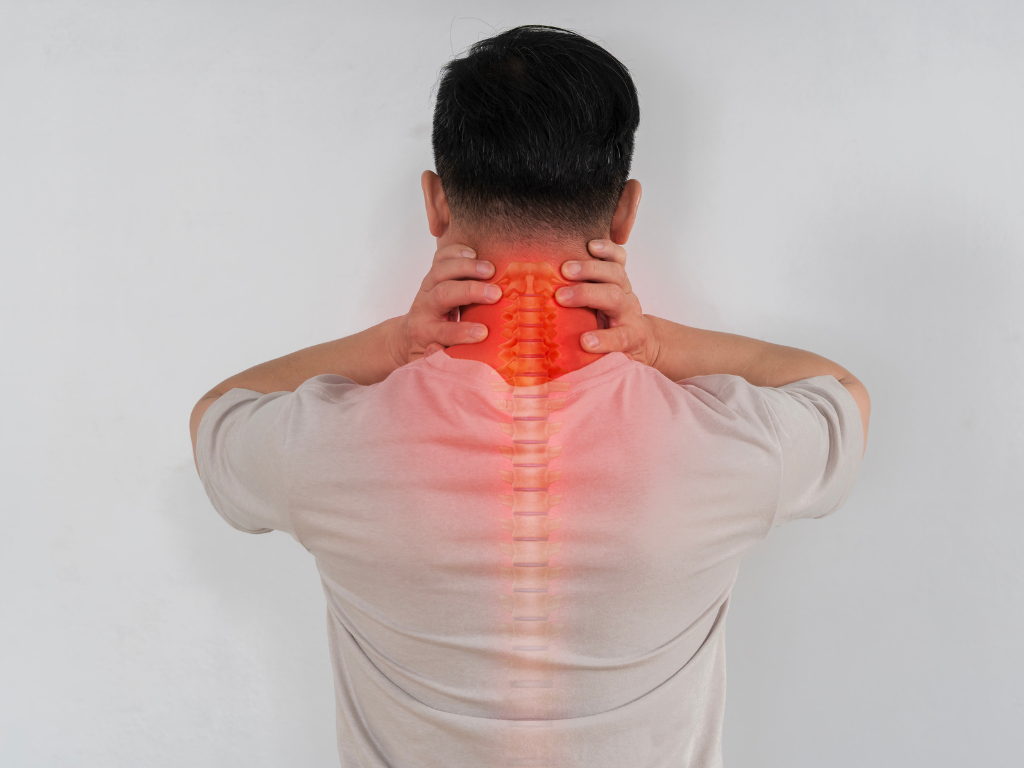
Which muscles and joints between the shoulder blades are the usual culprits?
Four structures account for most interscapular pain. The rhomboids, which retract the shoulder blades, fatigue and develop tender bands when you sit hunched for hours. The middle and lower trapezius, working overtime to hold a forward-drifting head, ache in the same zone. Underneath them sit the thoracic facet joints, small paired joints that stiffen with sustained flexion, and the costovertebral joints where each rib meets the spine, which flare with rotation and deep breathing.
Rib joint involvement is the one people miss. A stiff or irritated costovertebral joint produces a sharp, catching pain that worsens on a deep breath or a twist, and it is often mistaken for something cardiac or respiratory. Muscular pain, by contrast, is a dull, gnawing ache that eases when you change position. Worth noting: these structures rarely fail in isolation. A stiff thoracic segment overloads the rhomboids above it, and the muscle is what you feel even though the joint is the driver. This is why soft tissue therapy alone often gives only short relief when the underlying joint stiffness goes unaddressed.
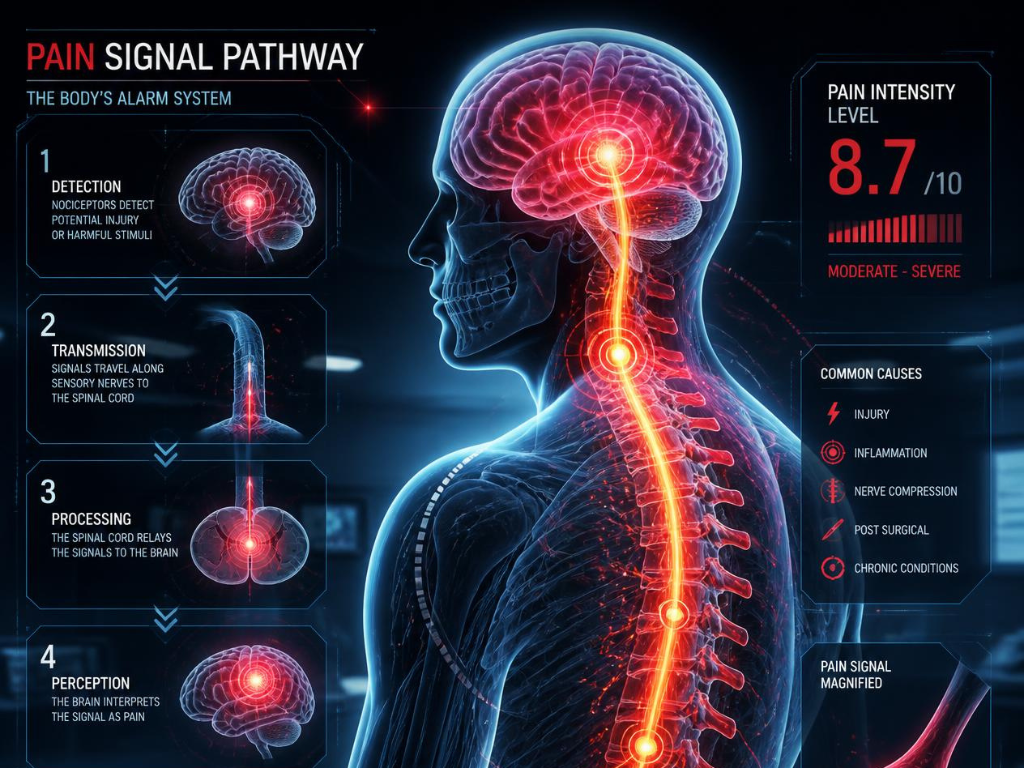
Can a neck problem cause pain between the shoulder blades?
Yes, and this is the single most overlooked cause. The lower cervical spine refers pain directly into the interscapular region, so a problem in your neck can present as a stubborn ache between your shoulder blades with no neck pain at all. The C6-C7 facet joint, in particular, refers pain to the area around and below the shoulder blade.
The referral maps are well established. Researchers Dwyer, Aprill, and Bogduk documented these patterns in landmark 1990 studies, and later work confirmed that lower cervical facet joints refer to the interscapular area. That same review describes cervical facet pain as producing “heavy, dull, and obscure neck, upper back, and shoulder pain.” The C5-C6 and C6-C7 joints are the common offenders, and the cervical facet joints most likely to drive chronic pain sit at C2-C3, C5-C6, and C6-C7. The practical tell is simple: if your shoulder-blade pain changes when you move your neck, the neck is the source. Treating the mid-back in that scenario is chasing a shadow, and it is a frequent reason people with desk-related neck strain never get lasting relief.
Why does desk work leave you aching between the shoulder blades?
Sustained sitting is the leading driver, through a mechanism called postural fatigue. When you hold a forward-head, rounded-shoulder position for hours, the rhomboids and mid-trapezius contract continuously to stop your upper body collapsing further forward. Static load with no movement fatigues these muscles far faster than dynamic effort does, which is why an eight-hour desk day hurts more than a gym session.
Over months, the pattern hardens into scapular dyskinesis: the shoulder blades stop moving normally, tilting forward and failing to rotate cleanly when you lift your arm. That altered mechanics keeps reloading the same tissue. Sedentary work is strongly linked to upper body pain, with office-worker musculoskeletal complaints in the shoulder and neck reported at 40% to 80% across studies. The fix is not a better chair alone. It is movement frequency plus rebuilding the postural muscles, which is exactly what a structured workplace posture screening targets for teams that sit all day.
When is pain between the shoulder blades a red flag?
Most interscapular pain is musculoskeletal, but a specific set of symptoms means you stop self-treating and seek emergency care. Sudden, severe, tearing or ripping pain between the shoulder blades can signal an aortic dissection, a tear in the body’s main artery. It occurs in roughly 2 in every 10,000 people and is a medical emergency. Pain accompanied by chest tightness, shortness of breath, sweating, nausea, or lightheadedness can indicate a heart attack, and women more often present with back or interscapular pain rather than classic chest pain.
These causes are uncommon, but they are the reason triage comes first. Government health sources are explicit that aortic pain can be felt between the shoulder blades, and NHLBI cardiologist Dr. Sujata Shanbhag stresses it is “essential to seek care right away.” Other non-mechanical sources include gallbladder disease, which refers pain to the right shoulder blade, and, rarely, lung problems. If your pain is sudden and severe, unrelated to movement or posture, or paired with any of these symptoms, call 995 or go to the nearest A&E. A responsible chiropractor screens for exactly these signs before starting any treatment.
Why won’t the knot between your shoulder blades go away?
A knot that keeps returning is a symptom, not the problem. The tender lump you feel between your shoulder blades is a trigger point, a band of over-contracted muscle, and it reforms because something upstream keeps overloading that muscle. Massage the knot without fixing the driver, and it comes back within days.
The usual upstream culprits are the ones already named: a stiff thoracic facet joint, a referred cervical problem, or scapular dyskinesis from desk posture. Release the muscle and the relief is real but temporary; correct the joint stiffness or the movement fault, and the trigger point stops regenerating. This is where dry needling earns its place, deactivating the trigger point directly so the muscle can reset, but only as part of a plan that also restores the joint and the posture. Standalone dry needling that is never paired with joint and postural work buys the same short relief as massage. The durable result comes from treating the cause, not the lump.
How do you actually fix pain between the shoulder blades?
Effective treatment matches the source, which is why assessment precedes any hands-on work. For mechanical thoracic pain, the combination that works is restoring joint movement, releasing the overloaded muscles, and rebuilding the postural strength that failed. A chiropractic adjustment mobilises the stiff thoracic facet segments; soft tissue therapy and dry needling settle the rhomboid and trapezius; and targeted exercise retrains scapular control so the pain does not return.
For referred cervical pain, the plan shifts up a level to the neck, because treating the mid-back would miss the origin entirely. That is the value of an accurate diagnosis: it points the treatment at the real driver rather than the loudest symptom. At Chirotherapy, a first visit at the Orchard or Bugis clinic starts with a screen for red flags, then a mechanical assessment of the thoracic spine, cervical spine, and scapular movement to separate a local problem from a referred one. Most mechanical cases settle within a handful of sessions once the driver is identified. The cleaner approach is always to diagnose first and treat second, rather than defaulting to whichever spot hurts.
Conclusion
Pain between the shoulder blades is usually a mechanical problem in the rhomboids, trapezius, or thoracic joints, and it is frequently referred from the lower neck rather than originating where you feel it. Serious causes are rare but real, so triage comes before treatment. The lasting fix targets the driver, whether that is a stiff thoracic segment, a cervical referral, or desk posture, not just the knot you can feel.
If pain between your shoulder blades keeps returning or you are not sure where it comes from, book an assessment at Chirotherapy’s Orchard or Bugis clinic. You will get a red-flag screen, a clear diagnosis that separates local pain from a referred one, and a plan aimed at the real cause. Book an assessment.
Frequently asked questions
Is pain between the shoulder blades a sign of a heart attack?
Usually not, but it can be. Most interscapular pain is muscular or joint-related, yet a heart attack can present as upper back pain, especially in women, when paired with chest tightness, shortness of breath, sweating, or nausea. If those symptoms appear, call 995 immediately. Aortic dissection, affecting about 2 in 10,000 people, causes sudden tearing back pain and is also an emergency.
Why does it hurt more between my shoulder blades when I breathe?
A sharp pain that worsens on a deep breath usually points to a costovertebral joint, where a rib meets the thoracic spine. These joints stiffen or irritate with posture and rotation, producing a catching pain on inhalation. It is mechanical and treatable with adjustment and mobility work. If breathing pain comes with breathlessness or chest pain, seek emergency care to rule out lung or heart causes.
Can bad posture cause mid back pain?
Yes. Sustained forward-head, rounded-shoulder posture is a leading cause of mid back pain through postural fatigue of the rhomboids and trapezius. Office workers report shoulder and neck musculoskeletal pain at rates of 40% to 80%. The solution is frequent movement and strengthening the postural muscles, not just sitting up straighter for a few minutes at a time.
Should I see a chiropractor or a doctor for upper back pain between the shoulder blades?
See a chiropractor for mechanical pain linked to posture, movement, or a stiff joint, especially if it has lasted more than two weeks. See a doctor or A&E first if the pain is sudden and severe, unrelated to movement, or paired with chest, breathing, or cardiac symptoms. Chirotherapy screens for these red flags before treating and refers on when needed.
