 +65 6873 0809
 info@chirotherapy.com.sg
Blog
Lower Back Pain From Sitting: Why It Peaks at 4pm
Sep
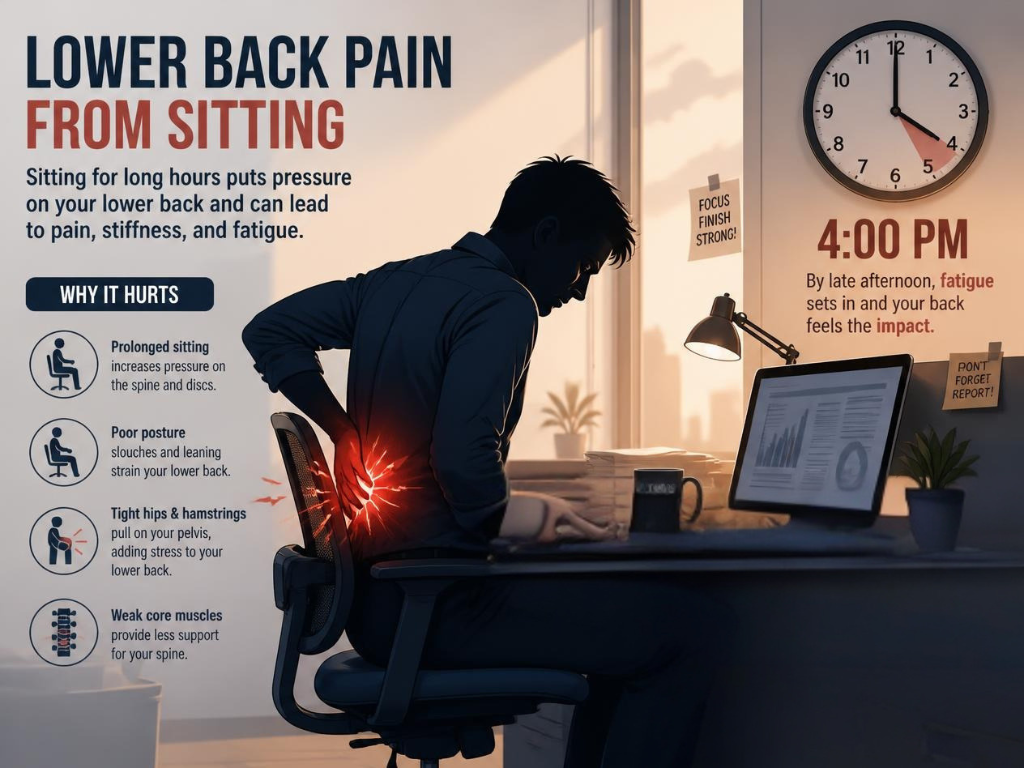
Lower back pain from sitting rarely announces itself at 9am. It creeps in by mid-afternoon, which is why so many desk workers describe a 4pm ache that was absent at the start of the day. Between 40% and 80% of office workers report musculoskeletal pain. This blog walks you through why the timing matters and what the chiropractic treatment services actually change.
Why does your lower back hurt more at 4pm than at 9am?
Your lower back hurts more at 4pm because the strain from sitting is cumulative, not instant. Over a morning of static, flexed sitting, three things stack up. Viscoelastic creep slowly stretches the spine’s supporting ligaments, the deep postural muscles fatigue, and the discs lose fluid and pressure balance. By afternoon, the same chair that felt fine at 9am now aches.
Creep is the mechanism most people have never heard of, and it explains the timing perfectly. Spinal ligaments and discs are viscoelastic, so under a sustained load they deform gradually and lose the passive tension that normally protects the joints. Hold a slouched posture for three or four hours and that protective stiffness quietly drains away, leaving the muscles to pick up the slack until they, too, tire. The researchers behind a 2024 active break trial put it plainly: positions held for a prolonged time “cause overloading of soft tissue and discogenic symptoms.” This is why the fix is rhythm, not a single correction. A perfect posture held motionless still creeps. Movement is what resets it, which is the throughline of everything below.
Why does sitting cause lower back pain in the first place?
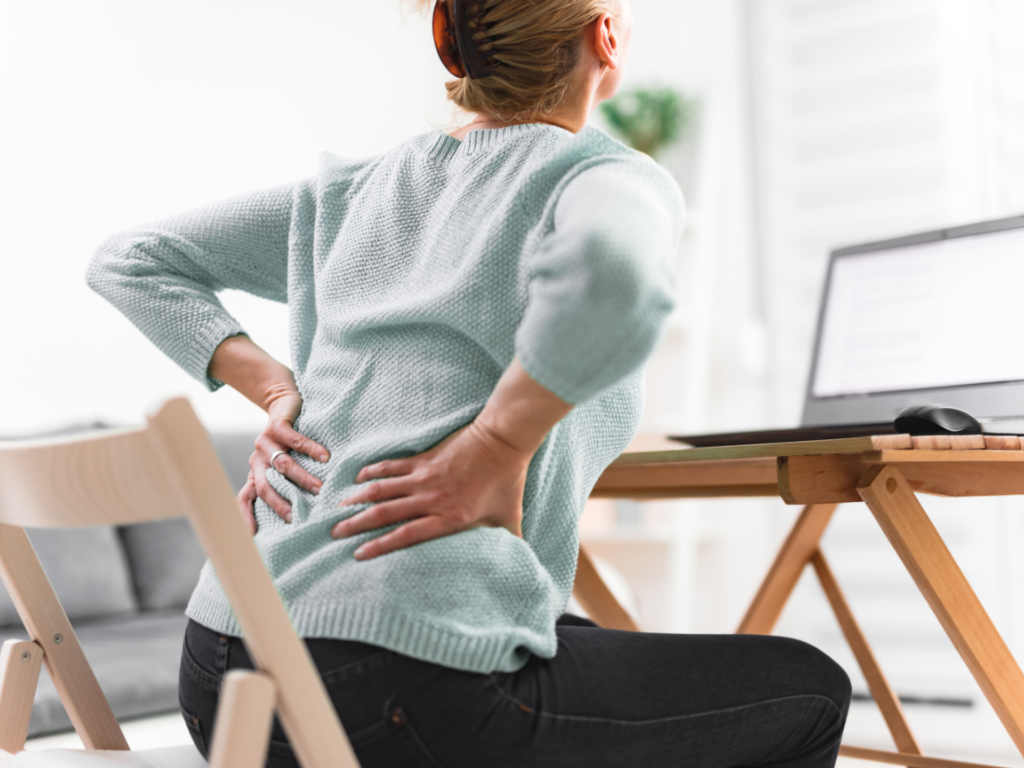
Sitting loads the lower back through sustained flexion, not through sitting itself. What actually raises the pressure is a slouched, flexed position held for hours. In vivo measurements show a maximally flexed sitting posture drives disc pressure to 0.83 MPa, against 0.46 MPa for upright unsupported sitting and 0.5 MPa for relaxed standing. The posture, not the chair, sets the load.
Two other changes compound it. Prolonged sitting shortens the hip flexors, which tilts the pelvis and flattens the lumbar curve, pulling the spine into more flexion over time. The gluteal muscles switch off, so the back works harder to stabilise a position the hips should be sharing. These in vivo disc pressures come from Wilke and colleagues, whose landmark 1999 study also reached the conclusion that matters most here: “constantly changing position is important to promote flow of fluid to the disc.” The disc has no direct blood supply and feeds through movement, so a motionless spine is a poorly nourished one. That combination of sustained flexion, hip flexor shortening, and stalled fluid exchange is the engine behind chiropractic care for back pain in desk workers.

Is sitting or standing worse for your lower back?
Neither is inherently worse; holding either one motionless for hours is the actual problem. The old claim that sitting crushes your discs far more than standing comes from 1960s data that newer measurements have complicated. A 2022 systematic review comparing sitting and standing disc pressure found sitting produced higher pressure than standing in healthy discs, yet recent studies do not consistently reproduce that gap, and degenerated discs showed no difference between the two.
The practical takeaway is that alternating beats optimising. Standing all day carries its own risks, from circulatory strain to foot and hip fatigue, so swapping eight hours of sitting for eight hours of standing trades one static load for another. The spine is built for variety, loading and unloading through movement. Worth noting: the best posture is genuinely the next one. A worker who shifts between sitting upright, standing, and walking every half hour loads the lumbar spine far more healthily than one locked in an ergonomically perfect chair from 9 to 5. Position rotation, not position perfection, is what protects the back.
How often should you get up when you sit all day?
Every 30 to 40 minutes is the interval that keeps creep and fatigue from accumulating. A short movement break resets the viscoelastic creep in the spinal tissues before it builds into the afternoon ache, and it restarts the fluid exchange the discs depend on. The break does not need to be long. Sixty to ninety seconds of standing, walking, or gentle back extension is enough to reverse most of the loading.
The evidence favours frequency over duration. A 2024 randomised trial had participants take an active break every 30 minutes, pairing it with lumbar and hip extension movements to reduce low back pain and discomfort during prolonged sitting. In practice, most teams I have seen succeed set a recurring 40-minute timer rather than relying on willpower, because the pain that would normally remind you to move only shows up once the damage has already accumulated. The cleaner approach is to move on a schedule, before the ache arrives, not after. Two minutes of movement every 40 minutes reshapes an entire workday of spinal load.
Do standing desks actually fix sitting-related back pain?
Standing desks help, but only because they let you alternate, not because standing is a cure. A sit-stand desk earns its value when you switch positions through the day, shifting the load between sitting, standing, and walking. Used that way, it reduces the sustained flexion that drives disc pressure and gives the postural muscles regular relief.
Used badly, it does nothing. Standing rigidly at a raised desk for six hours simply swaps a flexed static load for an extended static one, and long standing bouts bring their own circulatory and lower-limb strain. The desk is a tool for movement, not a posture in itself. Set it to prompt a change every 30 to 40 minutes, keep the screen at eye level, and treat standing as one option in a rotation rather than the destination. For teams that sit all day in the CBD, a structured workplace wellness programme that pairs the hardware with movement habits and screening outperforms handing everyone a standing desk and hoping. The equipment matters far less than how often you change position on it.
How do you relieve lower back pain from sitting?
Relief comes from undoing the specific things sitting does: reverse the flexion, lengthen the hip flexors, and reactivate the muscles that switched off. Movement is the first line. Regular breaks, back extensions that counter the day’s flexion, and hip flexor and hamstring stretches address the shortened tissues that pull the pelvis out of position. Strengthening the glutes and deep trunk muscles rebuilds the support the back has been covering for.
Hands-on care speeds the process when pain is already established. Spinal decompression and adjustment restore movement to stiff lumbar segments, while soft tissue therapy releases the tight hip flexors and overworked back muscles that sustained sitting creates. If your lower back pain from sitting has persisted beyond two to three weeks, keeps returning every afternoon, or radiates into the leg, that is the point to get assessed rather than keep adjusting your chair. In practice, the durable fix is a combination: change how you sit, move more often, and treat the tissues that have already adapted to the desk.
Conclusion
The 4pm ache from sitting is cumulative, driven by viscoelastic creep, muscle fatigue, and stalled disc nutrition that build through a static, flexed morning. Sitting versus standing is the wrong debate; holding any position motionless for hours is the real problem, and movement every 30 to 40 minutes is the fix that resets the load. Treat the tissues that have already adapted, and change the habit that created them.
If your desk job leaves you aching every afternoon, book an assessment at Chirotherapy’s Orchard or Bugis clinic. You will get a check of the hip, spinal, and postural drivers behind your pain, plus a plan that combines hands-on treatment with the movement changes that keep it from returning. Book a desk-pain assessment.
Frequently asked questions
Why does my back hurt after sitting a long time but feel better when I walk?
Walking reverses what sitting does. It unloads the flexed lumbar posture, restarts the disc fluid exchange that a motionless spine stalls, and reactivates the glutes that switch off when you sit. Wilke’s 1999 research confirmed that changing position promotes disc nutrition. The relief is real, which is why movement is the first-line fix for sitting-related back pain.
Can an office chair cause lower back pain?
A chair contributes, but the bigger factor is how long you stay in it. Even a well-designed chair produces sustained flexion and viscoelastic creep if you sit motionless for hours. A slouched sitting posture pushes disc pressure to 0.83 MPa versus 0.46 MPa upright. Rotating position every 30 to 40 minutes matters more than the chair model.
What stretches help back pain from sitting?
Hip flexor stretches, standing back extensions, and hamstring stretches target the tissues sitting shortens. Prolonged sitting tightens the hip flexors and flattens the lumbar curve, so lengthening them helps restore normal posture. A 2024 trial paired hip and lumbar extension movements with breaks every 30 minutes to reduce discomfort. Pair the stretches with glute strengthening for lasting effect.
Is it bad to sit all day even with good posture?
Yes. Even a perfect posture held motionless causes viscoelastic creep and stalls disc nutrition, because the spine is built for movement, not for holding any single position for hours. The problem is duration and stillness, not just alignment. Breaking up sitting every 30 to 40 minutes protects the back more than posture alone.
