 +65 6873 0809
 info@chirotherapy.com.sg
Blog
Does Dry Needling Hurt? What the First Session Feels Like
Sep
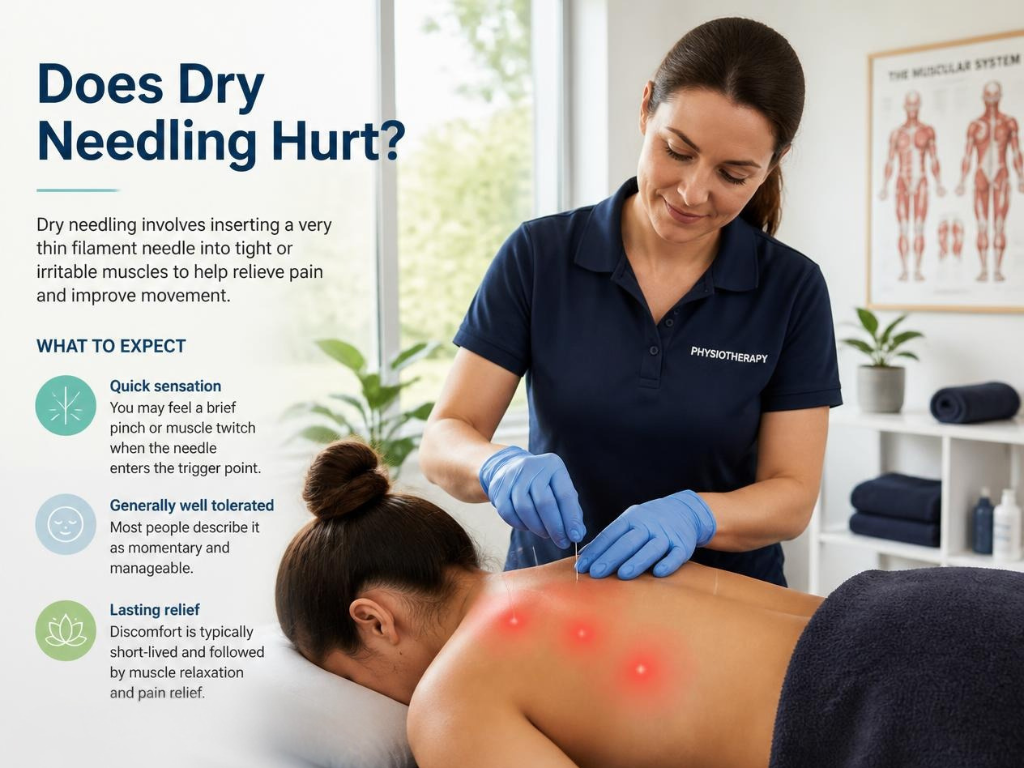
“Does dry needling hurt?” is the question every first-timer asks before booking, and the honest answer surprises most: the needle itself is barely felt. Mild, short-lived side effects show up in under 20% of treatments, and serious ones are vanishingly rare. This blog walks you through exactly what the first session feels like, alongside the chiropractic treatment options it complements.
Does dry needling hurt?
Dry needling is rarely painful in the way people fear. Inserting the thin monofilament needle, roughly 0.25 mm across, is barely felt, because it is many times finer than the hollow needle used for a blood test, which runs closer to 0.8 mm. What you feel is not the skin prick. It is the muscle’s response when the needle reaches a trigger point.
The sensation people report is a deep, dull ache or a quick cramp, not the sharp sting of an injection. Injections push fluid through a wide bore needle and stretch the tissue; dry needling delivers nothing, so the tissue is not distended. That difference in mechanism is why the two feel worlds apart despite both involving a needle. Discomfort during treatment is uncommon. A prospective survey of 7,629 dry needling treatments recorded pain during treatment in just 3.01% of sessions and pain afterward in 2.19%. Worth noting: a skilled practitioner adjusts depth and needle count to your tolerance, so the first session is deliberately gentler than later ones.
What does dry needling feel like when the muscle twitches?
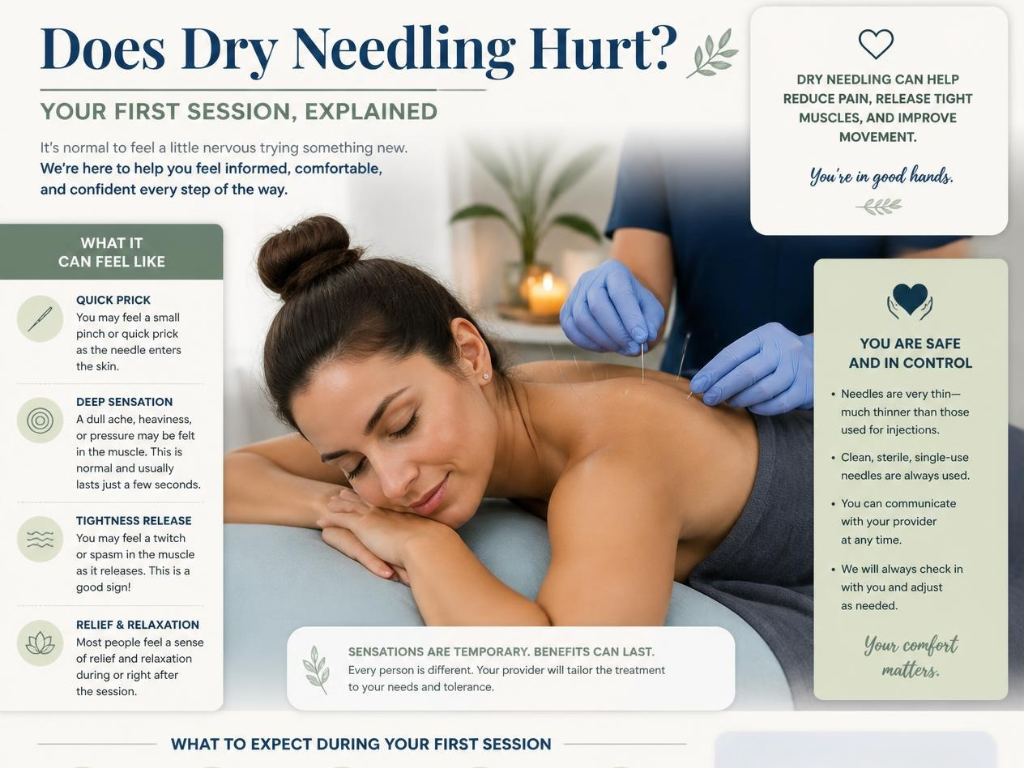
The defining sensation is the local twitch response, a brief, involuntary muscle contraction when the needle contacts an active trigger point. It feels like a fast cramp or a jolt that grabs and releases in a fraction of a second, then settles. Simons and Dexter described this twitch as “a visible contraction of part of the taut band,” and it is the marker practitioners aim for because it signals the trigger point is releasing.
The twitch is over almost before you register it. Some people feel it as a small electric flick; others feel a referred sensation spreading along the muscle. Both are normal and both are good signs. A muscle with a genuine trigger point will twitch; a healthy one will not, which is part of how the practitioner confirms the target. After the twitch, the muscle usually softens and the area feels warm or heavy. This mechanical reset is the point of the technique, and it explains why dry needling pairs so naturally with soft tissue therapy in the same visit.
What does the first dry needling session actually feel like?
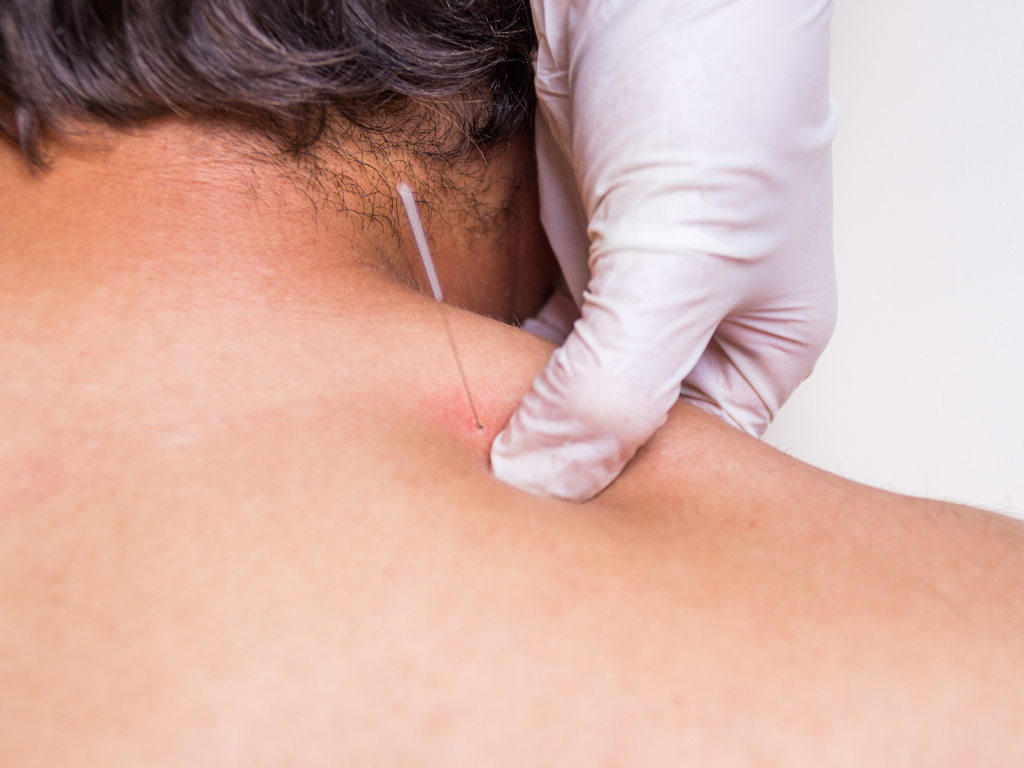
The session follows a predictable arc, and knowing it removes most of the anxiety. It starts with palpation: the chiropractor presses along the muscle to locate the taut band and the exact trigger point, which is often the most tender moment of the whole appointment. The needle goes in next, and most people are surprised they barely feel the insertion.
Then comes the twitch, a quick cramp as the needle reaches the trigger point, followed by a dull ache that spreads through the muscle. A single point takes seconds to a couple of minutes. The needle is either left in place briefly or moved with a gentle pistoning motion to elicit a few twitches, then removed. Afterward the area feels heavy, warm, and mildly sore, similar to the feeling after a deep massage. Most first sessions target two to four trigger points and last 10 to 20 minutes as an add-on to a chiropractic visit. In practice, the people who brace for something traumatic walk out saying it was far less dramatic than expected, which mirrors the sensible recovery timelines set for any hands-on treatment.
Why are you sore after dry needling, and how long does it last?
Post-needling soreness is normal, expected, and short-lived, usually clearing within 24 to 48 hours. The soreness comes from the mechanical disruption of the trigger point and the twitch response, which briefly inflames the local tissue as it resets. It feels like the muscle ache after an unfamiliar workout, a dull tenderness rather than a sharp pain.
The timeline is consistent. Soreness peaks in the first few hours, eases overnight, and is largely gone within two days. Drinking water, moving the muscle gently, and applying heat all speed the recovery, while sitting still and tensing the area prolongs it. The cleaner approach is to treat the day of needling like the day after leg day: stay mobile, stay hydrated, and expect a good soreness, not a setback. If soreness lasts beyond 72 hours or intensifies rather than fading, that is worth flagging to your practitioner, though it is uncommon.
What are the side effects of dry needling?
The side effects are mostly minor and skin-deep. The most common are bruising and light bleeding at the needle site, followed by short-term soreness. In the largest prospective survey of dry needling safety, mild adverse events occurred in 19.18% of 7,629 treatments, with bruising at 7.55% and bleeding at 4.65%, while no significant adverse events were recorded at all.
A larger 2020 survey of 20,464 treatment sessions found a similar pattern, with bleeding, bruising, and needling pain topping the list of minor events and fainting occurring in under 1% of sessions. Bruising is more likely if you take blood-thinning medication or have a bleeding disorder, which is exactly why the practitioner asks about your history first. Serious events like pneumothorax are rare and tied almost entirely to needling near the ribcage without proper technique, a 2025 patient-focused review of dry needling benefits and adverse events reinforces. Skill and anatomical knowledge, not the needle, determine the risk.
Is dry needling safe, and who should avoid it?
Dry needling is safe in trained hands. The Brady survey of chartered physiotherapists concluded that trigger point dry needling “appeared to be a safe treatment,” recording no significant adverse events across 7,629 treatments, an upper risk estimate of 0.04% or less. The technique’s safety tracks the practitioner’s training, which is why the Level 3 Advanced Dry Needling qualification held within the Chirotherapy team matters more than any equipment.
Certain people should avoid it or proceed with caution. Needle phobia, active skin infection at the site, and uncontrolled bleeding disorders are clear reasons to skip needling. Those on anticoagulants face a higher bruising and bleeding risk and need a case-by-case decision. Pregnancy calls for a modified approach, with specific points avoided, especially in the first trimester. A responsible clinic screens for all of this before the first needle goes in, and offers alternatives like manual release or chiropractic adjustment when needling is not appropriate. The screen is not a formality. It is what keeps a low-risk procedure low-risk.
What should you do after a dry needling session?
Aftercare is simple and it shortens the soreness. Drink plenty of water, keep the treated muscle moving with gentle activity, and use heat rather than ice to ease post-needling soreness. Light movement flushes the area and helps the muscle settle faster than rest does.
A few things are worth avoiding for the rest of the day. Skip intense exercise, heavy lifting, and alcohol, all of which increase bruising and can aggravate the freshly treated tissue. Expect the area to feel tender for 24 to 48 hours, and expect that to be the extent of it. If you booked dry needling as part of a broader plan, the soreness usually fades just as the therapeutic benefit sets in, and the muscle moves more freely within a day or two. Chirotherapy delivers needling across its Orchard and Bugis clinics, with published session fees listed from S$40 so the cost of adding it to a visit is clear upfront.
Conclusion
Dry needling is far gentler than the word “needle” suggests. The insertion is barely felt, the twitch is a brief cramp, and the main aftereffect is a workout-style soreness that clears in a day or two. Side effects are mild and skin-deep, serious ones are rare, and the whole risk profile hinges on the practitioner’s training rather than the needle. Knowing what to expect is most of the battle.
If you have been putting off dry needling because you were unsure it would hurt, book a session at Chirotherapy’s Orchard or Bugis clinic. You will get a full screen, a gentle first treatment paced to your tolerance, and clear aftercare so you know exactly what to expect. Book a dry needling session.
Frequently asked questions
Is it normal to bruise after dry needling?
Yes. Bruising is the most common side effect, reported in roughly 7.55% of treatments in the largest safety survey, and it is harmless. It happens when the needle nicks a small blood vessel and clears in a few days. Bruising is more likely if you take blood thinners, so tell your Chirotherapy practitioner before the session.
Does dry needling hurt more than acupuncture?
The insertion feels similar because both use a thin monofilament needle around 0.25 mm wide. The difference is the goal: dry needling deliberately provokes a local twitch response in the muscle, which acupuncture does not, so dry needling produces more of a deep cramp sensation. Neither resembles the sharp sting of a hollow injection needle.
Can I exercise after dry needling?
Light movement is encouraged, but skip intense exercise and heavy lifting for the rest of the day. Vigorous activity within 24 hours increases bruising and can aggravate the freshly needled muscle. Gentle walking and normal daily movement help the soreness settle faster. Most people return to full training the next day once the 24 to 48 hour soreness window passes.
Who should not get dry needling?
Dry needling is not suitable for people with needle phobia, an active skin infection at the site, or an uncontrolled bleeding disorder. Those on anticoagulants or in the first trimester of pregnancy need a modified, case-by-case approach. Chirotherapy screens your medical history before treatment and offers manual alternatives when needling is not the right call.
