 +65 6873 0809
 info@chirotherapy.com.sg
Blog
Posture Correction Singapore: What Actually Changes
Sep
Clinics across Singapore sell posture correction as a fix for back pain, headaches and confidence. The promise runs well ahead of the evidence. A 2020 umbrella review of 41 systematic reviews found no consensus that posture causes back pain. Part of your posture will respond to training. Part of it will not, whatever you spend or however long you persist. Below is where the line falls, and where chiropractic adjustment and traction fits around it.
What does posture correction actually change?
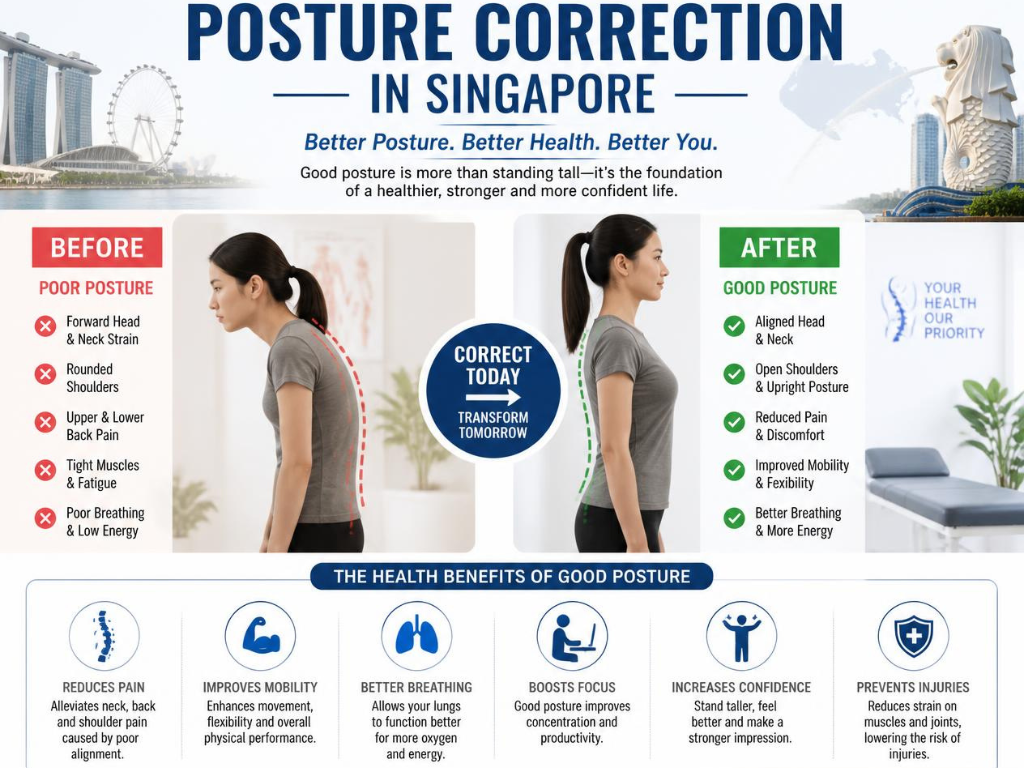
Posture correction changes what you can train: muscular endurance, motor control, load tolerance, and the habit of how you hold yourself. It does not reverse fixed skeletal structure, such as an established curvature or age-related vertebral change. When someone says they fixed their posture, they usually mean they built enough strength and awareness to hold a comfortable position, then stopped having to think about it.
Your postural muscles adapt first. The deep neck flexors, the lower and middle trapezius and the spinal extensors gain endurance, so they stop fatiguing by mid-afternoon. Motor control retraining follows, teaching your nervous system to sequence those muscles without conscious effort. Load tolerance rises after that, and it is the change most people notice: the same four hours at a desk that used to leave you aching becomes bearable. All three adaptations show up on measurement. The bony architecture underneath, the wedge shape of a vertebra or a fused segment, stays as it was. You train the muscles and habits that surround the skeleton, and the skeleton keeps its shape throughout.
Does bad posture actually cause pain?
The link is far weaker than the posture-correction industry claims. Clinicians and ergonomics consultants have blamed specific postures for back and neck pain for decades, and the research still does not support a clean causal story. Swain and colleagues, reviewing 41 systematic reviews in the Journal of Biomechanics in 2020, concluded there is “no consensus regarding causality of physical exposure to LBP.” Positive and null associations both turn up across the literature, and the evidence that a given posture precedes first-time pain is mixed.
Posture still matters. What provokes symptoms is sustained load on muscles that lack the capacity to carry it, rather than a deviation from a plumb-line ideal. Hold any one position for hours and the supporting muscles fatigue, whatever shape you were in when you started. A slouch you shift out of every 30 minutes causes few problems, while a textbook-perfect posture held rigidly from 9am to 6pm still fatigues the tissue. The patients I see improve are the ones who built the strength to move more often and hold a position longer. A straighter line on an assessment chart predicts very little on its own.
Can bad posture be reversed?
Partly. Your posture has a functional component that comes from muscle length, strength and habit, and that part trains at any age. It also has a structural component, the actual shape of your bones and joints, which in adults is mostly set. A rounded upper back caused by weak extensors and eight years at a desk softens with training. The same rounded back caused by vertebral wedging or advanced degeneration will not straighten, however well you train.
Even the structural side is not entirely fixed, which surprises people. Targeted exercise reduces an excessive thoracic curve by a measurable amount. Hyperkyphosis, defined as a thoracic kyphosis angle above 40 degrees and present in roughly 40% of older adults, responds to structured programmes. A 2021 systematic review found that exercise programmes of three months or less reduced thoracic hyperkyphosis, though the evidence sits at low to moderate quality. So you can shift the flexible portion of a curve and build the muscle to hold the shift, while a fused or wedged structure sets the ceiling on how far it goes. Working out which one you have is the entire point of an assessment. The same logic applies to reading forward-head desk posture accurately before you treat it.
How long does it take to correct your posture?
Expect measurable muscular change in 6 to 12 weeks, and lasting habit change over several months. Endurance and motor control start improving within the first two to four weeks of consistent work. Change in posture itself, including a reduction in a thoracic curve, shows up around the 6 to 12 week mark, which is why credible programmes run for at least three months. A 2024 randomised trial recorded a significant reduction in thoracic kyphosis angle after six weeks of targeted intervention.
The habit takes longer. Strength returns faster than the default position your body drifts into the moment you stop paying attention, and rewiring that default takes months of repetition. Anyone offering a corrected posture in a handful of sessions is selling you the assessment, not the outcome. The structural component then sets its own pace on top of that: a flexible curve improves within a season of training, and a fixed one will not move regardless of effort. Real recovery timelines rarely match a marketing calendar.
What does a posture assessment in Singapore involve?
A proper posture assessment measures your alignment against a fixed reference, then sorts the correctable from the fixed. It opens with a static postural assessment, often against a plumb line, checking whether the ear, shoulder, hip, knee and ankle fall in a reasonable vertical relationship. Your clinician measures the thoracic kyphosis and lumbar lordosis, notes the scapular position and any forward-head carriage, and records where the deviations sit.
The movement screen matters more than the static picture. A skilled assessor tests whether a rounded upper back straightens when you actively extend, because a curve that corrects on movement is functional and trainable, while one that stays put is structural. Muscle length and strength tests then find the weak or shortened links driving the pattern. For desk-heavy Singapore offices running a postural screening across a team, this is where the value sits: a vague complaint about bad posture becomes a specific number with a reassessment date attached. Skip the baseline and you will never know whether anything changed.
What doesn’t work for fixing posture?
Passive fixes and willpower do not create lasting change. Braces fail most often. A brace cues you to sit up while you wear it and builds no strength underneath, so the old pattern returns the day you take it off. Posture is a capacity and a habit, and a strap trains neither. Lean on one long enough and your postural muscles do less work, not more.
Forcing yourself straight is the second trap, and it backfires. A 2024 study found that forcing the back into an exaggerated upright position can “distort natural spinal curvatures” and create a mechanically unfavourable posture, the stiff over-corrected sit that most people cannot hold for more than a few minutes anyway. One chiropractic session will not fix posture either. An adjustment mobilises a stiff segment, and without strength and habit work around it, the segment stiffens back up. Every gadget in this category sells the same promise, which is that you can skip the training part. Nothing on the market has managed it yet.
How is posture actually corrected?
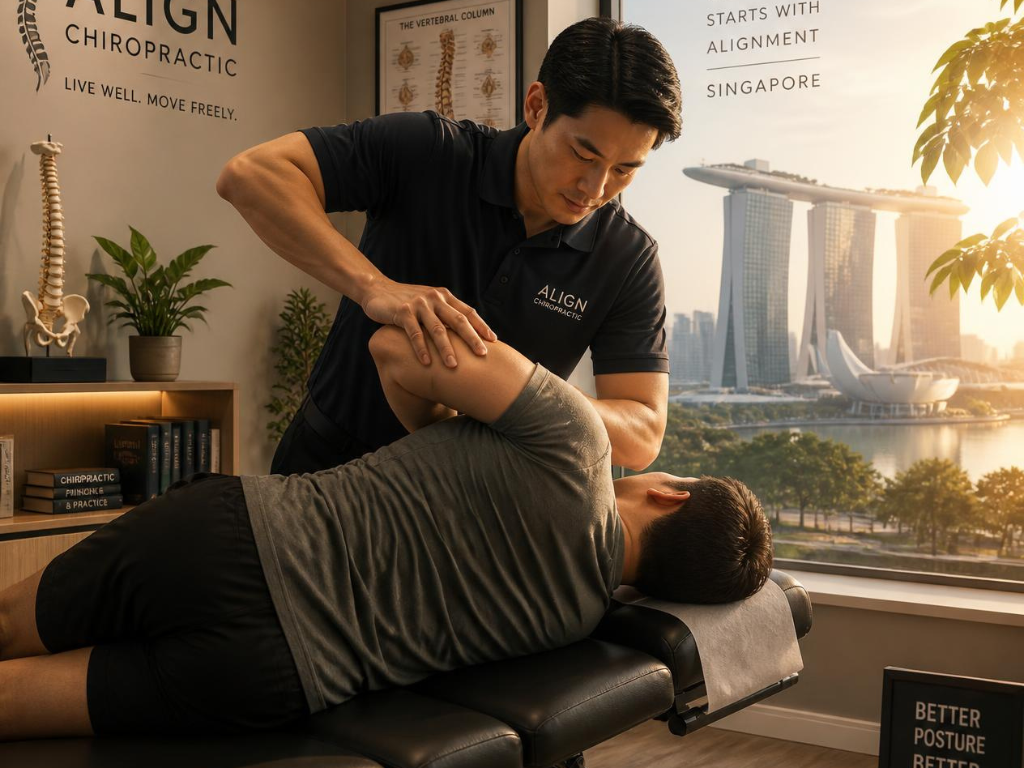
Posture correction works when you restore movement where you are stiff, build strength where you are weak, and repeat the corrected position often enough that it becomes your default. Hands-on care comes first. A spinal adjustment and soft tissue therapy free the stiff thoracic segments and release the shortened muscles holding you in the old shape, which makes the corrected position achievable instead of a fight against your own tissue.
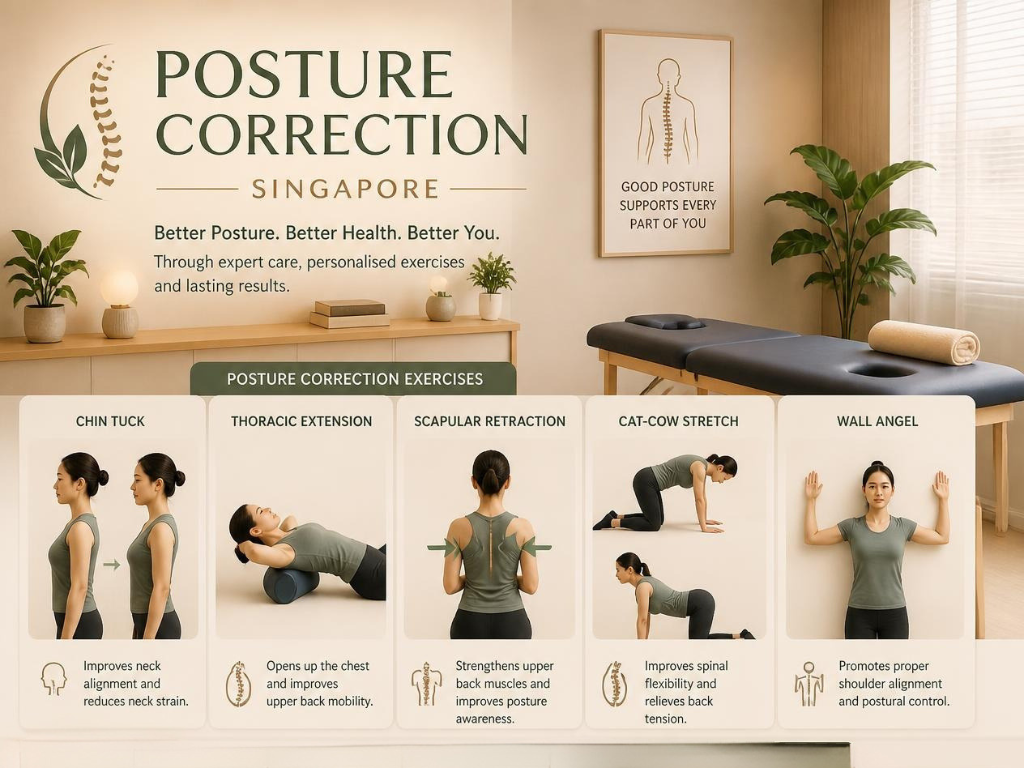
Training carries the rest. You strengthen the postural muscles until they hold position through a full workday, drill motor control until the pattern runs without conscious thought, and vary your positions so no single one fatigues you. No clinic can do the habit work for you; you build it through daily repetition over months. At our Orchard and Bugis clinics, posture work starts with the assessment that separates correctable from fixed, then pairs hands-on treatment with a loading and retraining plan written around what that assessment found. What you should be aiming for is a spine strong enough to sit, stand and work comfortably for a full day.
Conclusion
Posture correction changes muscle, motor control, load tolerance and habit. It leaves the fixed shape of your bones alone. Because the evidence linking a specific posture to pain is weak, the target is capacity and movement variety rather than a plumb-line ideal. Functional change is measurable in 6 to 12 weeks. Habit change takes months. Braces and willpower deliver neither, and assessment has to come before training for any of it to hold.
If you want to know which part of your posture is changeable, book a postural assessment at Chirotherapy’s Orchard or Bugis clinic. You will leave with an objective baseline, a clear split between the correctable and the fixed, and a training plan built to hold. Book a posture assessment.
Frequently asked questions
Can you fix your posture after decades of slouching?
Yes, the functional part. Muscle strength, endurance and movement habits train at any age, so decades of slouching improve with targeted work over three months or more. Fixed structural change, such as vertebral wedging or advanced degeneration, will not reverse. A Chirotherapy assessment identifies which of the two you are dealing with before anyone sets a plan.
Do posture correctors and braces work?
Not for lasting change. A brace cues you upright while you wear it, builds no strength and trains no habit, so the old pattern returns once it comes off. Rigid orthoses have some evidence behind them for reducing an excessive thoracic curve in older adults with hyperkyphosis. For everyday slouching, strengthening beats strapping, because posture is a capacity rather than a position a brace can hold for you.
Is forward-head posture from phones permanent?
No. Forward-head posture is mostly functional in heavy phone and desk users, and it improves when you strengthen the deep neck flexors and change the habit that created it. Sitting increases thoracic kyphosis and forward-head carriage, and in most people these are trainable adaptations rather than fixed deformities. Motor control work over 8 to 12 weeks produces measurable change.
How much does a posture assessment cost in Singapore?
Chirotherapy charges S$120 for a first visit, which covers consultation and assessment, and publishes treatment and assessment fees upfront. A proper assessment includes a static postural check, a movement screen and muscle testing to separate the correctable from the structural. Paying for a one-off gadget instead skips the diagnosis that tells you what is changeable in the first place.
