 +65 6873 0809
 info@chirotherapy.com.sg
Blog
Dry Needling for Back Pain: What It Does & When to Use It

Sep
Dry needling for back pain has moved from niche add-on to standard tool in Singapore chiropractic clinics, and the reason is muscular: between 63.5% and 90% of people with low back pain also carry myofascial pain driven by trigger points. This blog walks you through what the needle does to the muscle, what the evidence supports, and when needling belongs in your plan alongside the clinic’s chiropractic services and treatments.
What does the needle actually do to the muscle?
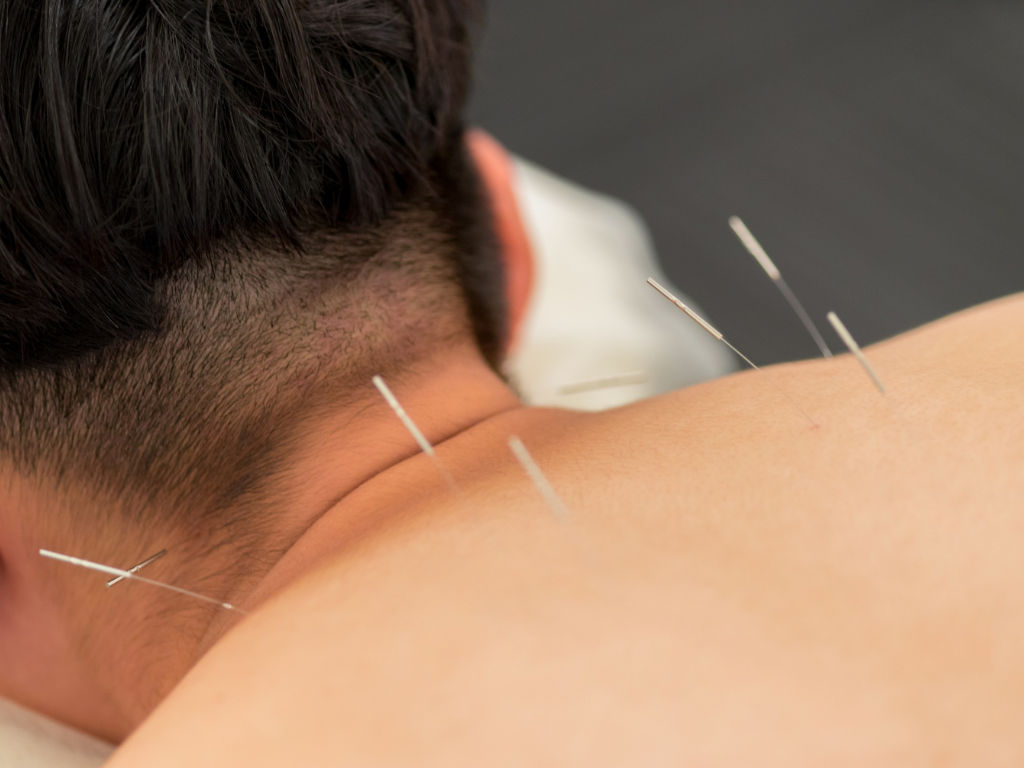
Dry needling inserts a thin monofilament needle, often as fine as 0.25 mm, directly into a myofascial trigger point: a hyperirritable knot sitting inside a taut band of muscle. The needle mechanically disrupts that knot and provokes a local twitch response, a brief involuntary contraction that resets the muscle and quiets its pain signalling.
The trigger point is the target, not the skin. Travell and Simons, whose Trigger Point Manual underpins modern practice, described these points as “hyperirritable nodules in the taut band of skeletal muscles.” When the needle reaches one, the therapeutic marker is the twitch. Simons and Dexter defined this local twitch response as “a visible contraction of part of the taut band.” That twitch matters because it lowers the concentration of pain-related chemicals at the muscle, reduces the electrical noise at the motor endplate, and lets a chronically shortened muscle lengthen.
Worth noting: dry needling uses no medication and no injectate. Nothing is pushed through the needle. The effect comes from the mechanical stimulus and the neurological cascade that follows, which is why practitioners describe it as trigger point release rather than an injection.
Does dry needling actually work for back pain?
The evidence supports short-term relief, strongest when needling is combined with other care rather than used alone. A 2018 systematic review and meta-analysis of 11 randomised trials covering 802 patients with low back pain found that dry needling produced significant reductions in pain intensity and functional disability straight after treatment, and that needling combined with other treatments outperformed needling on its own.
A 2023 systematic review in Arquivos de Neuro-Psiquiatria reached the same conclusion for myofascial low back pain: immediate benefits in reducing pain intensity are clear, while long-term efficacy needs more high-quality study. The honest read is that dry needling is a fast way to calm an angry muscle and open a window for movement, not a standalone cure. The lasting gains come from what you do inside that window: chiropractic adjustment, loading, and rehabilitation. This is the clearest stance in the literature, and it should shape how any clinic uses the technique.

Which back muscles hold the trigger points that get needled?
A handful of deep muscles account for most lower back trigger points, and they are predictable. The quadratus lumborum, the deep muscle running from the lowest rib to the pelvis, carries active trigger points in 30% to 55% of low back pain patients. The gluteus medius follows closely, with active points in 34% to 45% and latent points in as many as 74%. The lumbar iliocostalis sits in the 33% to 38% range.
These numbers come from a 2025 systematic review of trigger point prevalence in low back pain, and they explain a common frustration. Pain felt low and central often originates higher and to the side, because the quadratus lumborum and gluteus medius produce referred pain that travels away from the knot itself. A skilled practitioner palpates for the taut band and the referred pattern, not just the spot that hurts. That is why needling the gluteal region can settle pain a patient swore was purely spinal.
When is dry needling the right call, and when is it not?
Dry needling is the right call when the driver is muscular: palpable trigger points, a taut band that reproduces your pain, and mechanical low back pain that stalls despite movement. It shines as an adjunct that speeds up the pain-control phase so you can progress to loading sooner. In practice, it earns its place inside a plan for managing lower back pain, not as a treatment ordered in isolation.
It is the wrong call in specific situations. Red flags such as loss of bladder or bowel control, saddle numbness, progressive leg weakness, fever, or unexplained weight loss point to problems a needle cannot treat, and those need a doctor first. Needle phobia, active local infection, and certain bleeding disorders or anticoagulant use also shift the decision. Where this breaks down is when a clinic needles the same trigger point week after week with no rehabilitation attached. If the muscle keeps reloading a knot, the fix is upstream: posture, strength, and the daily habit feeding it, the same pattern behind stubborn injuries with their own recovery timelines.
Is dry needling the same as acupuncture?
No. They share a tool and nothing else. Dry needling is grounded in Western anatomy and neurophysiology, targeting myofascial trigger points to deactivate them and restore normal muscle function. Acupuncture works from traditional Chinese medicine theory, placing needles along meridians to influence energy flow. The needle looks similar; the map, the target, and the reasoning are different.
The practical distinction shows in where the needle goes. A dry needling practitioner needles the quadratus lumborum or gluteus medius because palpation found an active trigger point there. An acupuncturist selects points based on a meridian system. Dry needling is typically delivered by chiropractors, physiotherapists, and other musculoskeletal clinicians with specific certification, such as the Level 3 Advanced Dry Needling qualification held within the Chirotherapy team. Both can help pain, but they answer different clinical questions.
Does dry needling hurt, and is it safe?
The needle insertion itself is barely felt; the sensation people notice is the twitch, a quick cramp-like grab when the trigger point releases, followed by a dull ache. That ache is normal and usually settles within 24 to 48 hours. Most patients describe it as a good soreness, similar to the day after a hard workout.
Dry needling is safe in trained hands. The common side effects are minor: temporary soreness, small bruising, and occasional light bleeding at the site. Serious adverse events are rare and largely tied to needling near the ribcage, where an untrained hand risks the lung, which is exactly why practitioner qualification and anatomical knowledge matter more than the tool. A responsible clinic screens your medical history, avoids high-risk areas without cause, and uses single-use sterile needles. Applied to the lumbar and gluteal muscles by a certified practitioner, the risk profile is low and the technique pairs cleanly with hands-on soft tissue therapy.
How does dry needling fit into chiropractic care at Chirotherapy?
Dry needling works best as one layer of a plan, not the whole plan. At Chirotherapy, a session starts with assessment: the chiropractor screens for red flags, palpates the quadratus lumborum, gluteus medius, and erector spinae for active trigger points, and decides whether needling will actually move your case forward. If it will, it runs alongside adjustment and rehabilitation rather than replacing them.
The clinic delivers needling across two locations, Orchard at International Building and Bugis at Fortune Centre, with published session fees listed from S$40 as a treatment add-on so cost is clear before you commit. The needle calms the muscle, the adjustment restores joint movement, and graded exercise builds the load tolerance that stops the trigger point from reforming. That sequence is the point. Needling that is not followed by movement tends to buy relief that fades, which is why the technique sits inside a broader care plan at every visit.
Conclusion
Dry needling earns its reputation for one specific job: releasing the myofascial trigger points that drive a large share of back pain, and doing it fast. The evidence backs short-term relief, especially when the needle is paired with adjustment and loading rather than used alone. It is a precise adjunct, not a cure, and its value lives in the plan around it.
If your back pain feels muscular, keeps returning, or has stalled despite movement, book a dry needling assessment at Chirotherapy’s Orchard or Bugis clinic. You will get a trigger point screen, a clear yes or no on whether needling fits, and a plan built to keep the pain from coming back. Book a dry needling session.
Frequently asked questions
How many dry needling sessions will I need for back pain?
Most people notice a change within two to four sessions for muscular low back pain, delivered across a few weeks. Dry needling is not designed to run indefinitely. At Chirotherapy, needling supports the pain-control phase, then tapers as adjustment and exercise take over. If four sessions produce no change, the driver probably is not myofascial.
How much does dry needling cost in Singapore?
Chirotherapy lists dry needling from S$40 as an add-on to a chiropractic visit, with standalone pricing published on its fees page. Costs vary by clinic and whether needling is bundled with a consultation or adjustment. Booking it as part of a treatment plan, rather than as a one-off, usually gives better value and clearer outcomes.
Can dry needling replace chiropractic adjustment or exercise?
No. Dry needling releases trigger points in muscles like the quadratus lumborum, but it does not restore joint movement or build strength. A 2018 meta-analysis of 802 patients found needling worked better combined with other treatments than alone. Treat it as one tool in a plan that includes adjustment and graded loading, not a substitute for either.
How long do the effects of dry needling last?
Immediate relief is well documented, but duration depends on whether you address the cause. Needling a gluteus medius trigger point eases pain for days to weeks; without correcting the posture or weakness feeding it, the point can return. The 2023 evidence review flagged long-term efficacy as still uncertain, which is why rehabilitation matters.
