 +65 6873 0809
 info@chirotherapy.com.sg
Blog
How Many Dry Needling Sessions for Back Pain?
Sep
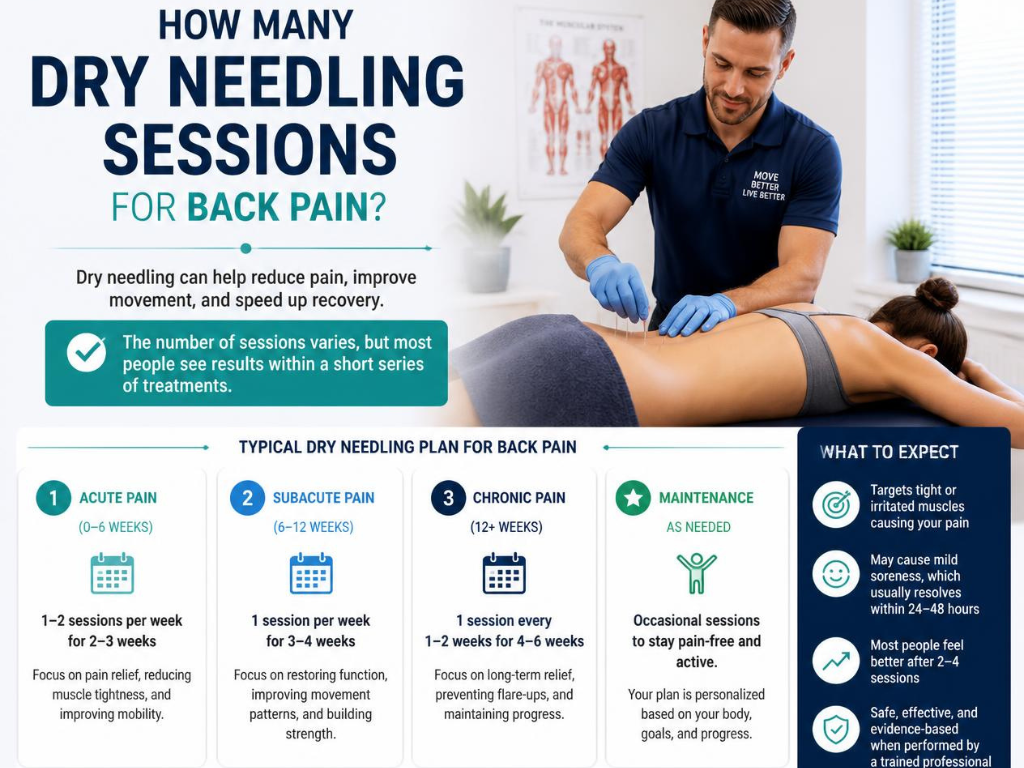
How many dry needling sessions you need for back pain is the question that decides whether the treatment is worth booking, and the realistic answer is 3 to 6. Across published trials, protocols run from a single session to 20. This blog walks you through the typical cadence, when to expect improvement, and how the sessions fit the wider chiropractic treatments offered at the clinic.
How many dry needling sessions do you need for back pain?
Most back pain improves meaningfully within 3 to 6 dry needling sessions, delivered roughly once a week. Simple, acute muscular pain often settles in 1 to 3 sessions. Chronic or recurrent pain usually takes the full course, sometimes a little more, because the trigger points have been reinforcing for longer.
The research range looks wide because study protocols differ. A 2023 systematic review of dry needling for low back pain found the number of sessions ranged from 1 to 20, with intervention periods from a single day to four months. That spread reflects experimental designs, not what a typical patient needs. In everyday practice for mechanical low back pain, the sweet spot sits at 3 to 6 sessions targeting the active trigger points in muscles like the quadratus lumborum and gluteus medius. Worth noting: the session count is a guide, not a prescription. A responsible practitioner sets an expected range at the first visit, then adjusts based on how your muscle actually responds, rather than selling a fixed block upfront.
How long does dry needling take to work?
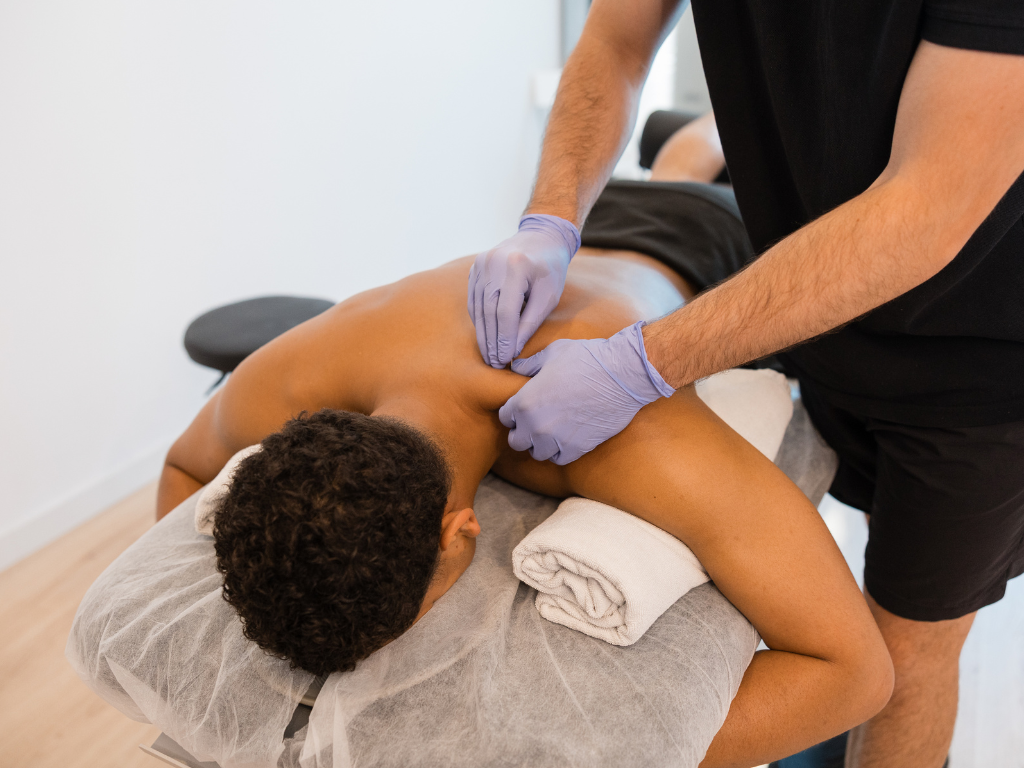
Improvement usually begins within the first 1 to 3 sessions, though it rarely arrives all at once. The immediate effect is a release of the treated muscle after the twitch response, so many people feel looser within a day or two of the first session, once the post-needling soreness clears. That early change is real but partial.
Lasting relief builds across the course. A randomised controlled trial of chronic low back pain delivered dry needling twice a week for four weeks and recorded a 6.45 point drop on the 10 point pain scale immediately after the eight-session course, with the benefit holding near 6 points three months later. The pattern is consistent: the first session tests whether the muscle responds, the next few consolidate the gain, and the effect deepens as the tissue resets. If you feel nothing at all after two or three sessions, the pain is probably not coming from the muscle being needled, which is a useful diagnostic signal in its own right.

How often should you get dry needling?
Once a week is the sensible default, and more frequent is not better. Weekly spacing gives the muscle time to recover from the mechanical disruption and the post-needling soreness, which typically lasts 24 to 48 hours, before the next treatment. Acute flares sometimes warrant twice-weekly sessions early on, but that is the ceiling, not the target.
The evidence backs restraint here. A 2026 multicentre trial compared dry needling delivered once versus three times per week over six weeks and found that higher frequency raised mild adverse events without improving pain relief, concluding that “higher dosing may benefit tissue outcomes without added pain relief.” Stacking sessions closer together mostly buys you more bruising and soreness. The cleaner approach is to needle weekly, use the gap to load and move the muscle, and let the soft tissue therapy and exercise do their share between visits.
What does a dry needling treatment plan actually look like?
A proper plan is a short course with a built-in exit, not a standing appointment. It opens with an assessment to confirm the pain is myofascial, then runs 3 to 6 weekly sessions, each pairing the needling with hands-on work and exercise. The needling calms the trigger point; the chiropractic adjustment restores joint movement; and loading rebuilds the muscle so the point stops reforming.
The plan tapers as you improve. Sessions move from weekly to fortnightly, then stop, with home exercise carrying the maintenance. This matters because dry needling alone produces short-term relief; the durable result comes from the combination. A 2018 systematic review of 802 low back pain patients found needling combined with other treatments was “more effective than dry needling alone,” which is why any plan that needles the same spot indefinitely without progressing to rehabilitation is doing it wrong. In practice, the patients who get the best value treat the course as a launchpad into self-management, following the same logic as sensible treatment timelines for any musculoskeletal problem. The goal of the plan is to make itself unnecessary.
When should you see improvement, and what if you plateau?
Session 3 to 4 is the reassessment point. By then, mechanical pain that responds to needling should show a clear downward trend in intensity, frequency, or how far it limits you. If it has not, continuing to needle is the wrong move. That plateau is a signal, and a good practitioner treats it as one.
The two honest interpretations of a plateau are these. Either the driver is not the muscle being needled, in which case the plan shifts to the joint, the nerve, or a referred source; or the muscle keeps reloading the trigger point because the underlying cause, often posture or weakness, has not been addressed. Both call for a change of approach, not more of the same. Discharge criteria matter just as much: once your pain is controlled and your load tolerance is rebuilt, the course ends. Endless sessions with diminishing returns are a red flag for any clinic. A clear reassessment point at session 4 protects you from paying for treatment that has stopped working.
How much do dry needling sessions cost in Singapore?
Dry needling at Chirotherapy is priced from S$40 as a treatment add-on, with a first visit that includes consultation and chiropractic treatment at S$120. A typical 3 to 6 session course therefore lands in a predictable range once you factor in whether needling is bundled with an adjustment or booked alongside one.
For recurrent or longer courses, package pricing changes the maths. The clinic’s twelve-visit concession is listed at S$840, which works out to S$70 per visit, a saving against per-session rates for anyone who knows they need a sustained plan. The published session fees lay out both the single-session and package options so you can plan the total before committing, rather than discovering the cost mid-course. The honest guidance: pay per session while you find out whether needling helps, and only move to a concession package once the first few dry needling sessions have proven they work for you. Buying a large block before that is a gamble.
Conclusion
Most mechanical back pain needs 3 to 6 dry needling sessions, spaced about a week apart, with improvement usually starting in the first one to three. More frequent needling adds soreness without adding relief, so weekly cadence plus exercise between visits is the efficient path. The course should taper and end, not run forever, with a firm reassessment by session 4 to catch a plateau early.
If you want a clear plan rather than an open-ended block of appointments, book a dry needling assessment at Chirotherapy’s Orchard or Bugis clinic. You will get an honest session estimate, a reassessment point built in, and a plan that pairs needling with the work that makes it last. Book a dry needling assessment.
Frequently asked questions
Is dry needling a one-time fix for back pain?
No. Dry needling works as a short course, typically 3 to 6 weekly sessions, not a single treatment. One session can ease an acute muscle flare, but lasting relief for mechanical low back pain builds across several sessions paired with exercise. If your pain is fully resolved after one session, it was likely mild and recent to begin with.
How long do the results of dry needling last?
Immediate relief lasts days to weeks, and it becomes durable only when you address the cause. A 2022 trial showed pain relief holding near its peak three months after an eight-session course, but that was combined with exercise. Needling the quadratus lumborum without correcting posture or weakness lets the trigger point return within weeks.
Do I need dry needling forever?
No. A proper plan tapers and ends once your pain is controlled and your load tolerance is rebuilt, usually within 3 to 6 sessions for mechanical back pain. Ongoing indefinite needling with no discharge point is a warning sign. Chirotherapy structures needling as a course with a reassessment at session 4, not a permanent commitment.
Should dry needling be combined with other treatment?
Yes. Evidence consistently shows dry needling works better combined with other care than on its own. At Chirotherapy, needling runs alongside chiropractic adjustment and graded exercise, because the needle calms the muscle while the adjustment and loading fix the joint movement and strength that let the trigger point form. Needling in isolation buys only short-term relief.
